Yes — and if your system hasn't been serviced in the past year, it's almost certainly costing you more than it should.
After servicing hundreds of homes across Kissimmee and Osceola County, we've learned something most homeowners don't realize: AC systems in Central Florida don't fail all at once. They slowly lose efficiency — clogged coils, low refrigerant, dirty blower wheels — while your Duke Energy bill quietly climbs higher every month. By the time most families call us, their system is working 20–30% harder than necessary just to keep up with our humidity.
A professional tune-up corrects exactly that. This page breaks down where the energy waste is actually happening in Kissimmee homes, what our technicians address during every visit, and what you can realistically expect to save on your monthly bill.
TL;DR Quick Answers
What Should Kissimmee Homeowners Know About HVAC Tune-Ups?
An HVAC tune-up in Kissimmee is an annual professional service that cleans, inspects, and optimizes your cooling system to restore efficiency and lower energy costs.
What it includes:
Coil cleaning
Refrigerant check
Condensate drain clearing
Electrical component inspection
Airflow and thermostat testing
Why it matters in Kissimmee specifically:
Systems run 10–12 months per year with no real off-season
High humidity accelerates condensate drain clogs and coil buildup
Neglected systems operate up to 25% less efficiently — directly raising your Duke Energy bill
When to schedule:
Once per year
Early spring — before summer cooling demands peak
What it costs vs. what it saves:
A tune-up typically pays for itself within two to three months of reduced energy costs
Homeowners with systems unserviced for 12+ months see the fastest return
Who to hire:
Verify an active Florida HVAC license at myfloridalicense.com before booking anyone
Bottom line: In Kissimmee's climate, an annual tune-up isn't optional maintenance — it's the most cost-effective thing you can do to protect your comfort and control your monthly energy bill.
Top Takeaways
1. Your HVAC system is your home's biggest energy expense — and Kissimmee makes it worse. Nearly half of all residential energy goes to heating and cooling. With no real off-season here, minor efficiency losses add real dollars to your Duke Energy bill every month.
2. A neglected system doesn't fail suddenly — it drains you slowly. Most homeowners feel it first as comfort problems. Rooms take longer to cool. Humidity won't break. The compressor runs constantly. The bill climbs. They assume it's just Florida.
3. A professional tune-up targets the specific problems Central Florida creates. Dirty coils, low refrigerant, clogged condensate drains, and degraded ductwork are the most common findings in Kissimmee homes. Catching them early prevents emergency repairs and premature replacement.
4. Tune-ups aren't the right answer for every system — and we'll say so. If your system is 15+ years old with multiple failure points, we'll recommend replacement over maintenance. Honest guidance comes first — always.
5. Act before peak season, not during it. Schedule in early spring. A tuned system heading into a Kissimmee summer is the difference between comfort and crisis.
Click Here to Download the PDF Version of the Slideshow AboveWhy Kissimmee Homes Lose AC Efficiency Faster Than Most
Central Florida's climate is uniquely brutal on HVAC equipment. Your system doesn't get a real off-season here. It runs through summer heat, fall humidity spikes, and mild winters that still require regular cooling cycles. That near-constant operation accelerates the buildup of dust, mold spores, and debris on critical components — faster than what technicians typically see in northern climates.
In our experience servicing Kissimmee homes specifically, the biggest efficiency killers we find are:
Dirty evaporator and condenser coils — when coated with dust and grime, coils can't transfer heat properly, forcing the system to run longer to reach your set temperature
Low or imbalanced refrigerant — even a small refrigerant deficiency quietly degrades cooling capacity and spikes energy consumption
Restricted airflow from clogged filters or blocked returns — one of the most common and most overlooked problems we find
Worn or failing capacitors — causes the motor to draw excess electricity on every startup cycle
Each of these issues alone adds measurable cost to your monthly Duke Energy bill. Together, they can push a system well past the 25–30% inefficiency range.
What a Professional HVAC Tune-Up Actually Does to Your System
A tune-up isn't a simple filter swap and a visual inspection. When our technicians service a Kissimmee home, they're working through a detailed diagnostic and restoration process that targets the specific efficiency losses described above.
Key steps our technicians perform on every tune-up visit:
Clean evaporator and condenser coils to restore proper heat exchange
Measure refrigerant levels and check for leaks
Inspect and test capacitors, contactors, and electrical connections
Clear and treat the condensate drain line — critical in Kissimmee's humidity to prevent mold and water damage
Test thermostat calibration and system controls
Check blower motor and fan operation for proper airflow
Measure supply and return air temperature differential to confirm the system is cooling at rated capacity
The condensate drain step is one we emphasize to Kissimmee homeowners in particular. High humidity means this line clogs frequently — and a blocked drain doesn't just create water damage. It triggers the system's safety shutoff switch, halting cooling entirely until it's cleared.
How Much Can a Tune-Up Actually Save on Your Electric Bill?
The U.S. Department of Energy estimates that a properly maintained HVAC system operates up to 25% more efficiently than a neglected one. In a market like Kissimmee — where AC accounts for the largest share of most households' energy costs — that translates to real, recurring monthly savings.
What we've seen in practice: homeowners who haven't had a tune-up in 12 or more months often experience an immediate, noticeable improvement in how quickly their home reaches temperature after service. Their system runs shorter cycles. The compressor isn't working as hard. Those shorter cycles are directly reflected in lower consumption on the next billing statement.
Exact savings vary by home size, system age, and current condition — but for a system that has drifted significantly from peak efficiency, a tune-up typically pays for itself within the first two to three months of reduced energy costs.
When a Tune-Up Helps Most — and When It Won't
We believe in giving honest guidance, even when it means recommending a service.
A tune-up delivers the highest return when:
Your system is 3–12 years old and hasn't been serviced in the past year
Your bills have been gradually climbing without explanation
Your home takes longer than it used to reach the thermostat setting
Your system is cycling on and off more frequently than normal
A tune-up may not be the right answer when:
Your system is 15+ years old and showing multiple component failures — at that point, a replacement conversation may be more financially sound
You've already had major repairs done recently and the system is running well
We'd rather tell you upfront that a repair or replacement makes more financial sense than having you invest in maintenance on a system that's already past its useful life. That's the kind of advice you'd expect from a neighbor — not just a contractor trying to sell a service call.
How Often Should Kissimmee Homeowners Schedule a Tune-Up?
The standard industry recommendation is once per year. In Central Florida, we recommend scheduling in early spring — before the heavy cooling demands of summer hit and appointment availability tightens. Getting your system serviced in March or April means you're heading into peak season with a clean, fully optimized system rather than discovering a problem in the middle of a July heat wave.
Homeowners enrolled in our Care Club maintenance program receive annual tune-ups as part of their plan, along with priority scheduling, filter delivery, and discounts on repairs — designed specifically for the demands of year-round AC operation in this climate.
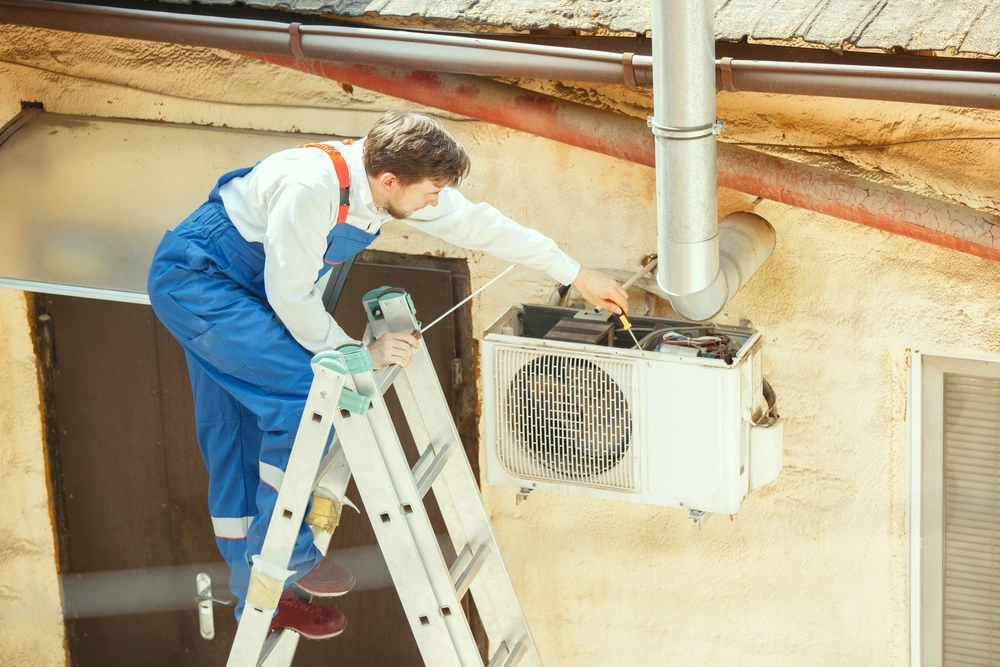
"In Kissimmee, we don't just tune up systems — we undo what a full year of Florida heat and humidity does to them. When I pull a condenser coil that hasn't been cleaned in 18 months and see what's built up on it, it tells me exactly why that homeowner's Duke Energy bill has been climbing, and exactly what it's going to take to bring it back down."
Resources We Recommend to Every Kissimmee Homeowner Researching a Tune-Up
When neighbors ask us where to start their research, we point them to the same trusted sources we rely on ourselves. These are the resources that give you honest, authoritative information — so you can make a confident decision without pressure from anyone, including us.
1. See Exactly What a Thorough Tune-Up Should Cover — U.S. Department of Energy
We've seen firsthand what corners look like when they're cut — and it's not pretty. The DOE's official air conditioner maintenance guide gives you a clear picture of every task a qualified technician should complete during a professional service visit. Use it as your personal checklist before any Kissimmee HVAC company sets foot in your home.
URL: https://www.energy.gov/energysaver/air-conditioner-maintenance
2. Understand Why Your Bill Keeps Climbing — ENERGY STAR
One of the most common things we hear from Kissimmee homeowners is: "My bill keeps going up but I don't know why." This EPA-backed resource explains, in plain language, how regular maintenance and filter changes directly reduce what you pay to cool your home every month. Worth reading before you write off another high electric bill as unavoidable.
URL: https://www.energystar.gov/saveathome/heating-cooling
3. Don't Leave Money on the Table — Duke Energy Florida Rebates
A lot of our Kissimmee neighbors don't realize Duke Energy offers up to $3,800 in rebates on qualifying HVAC improvements — and it all starts with a free Home Energy Check. If you're already investing in your system's efficiency, it's worth finding out what you're entitled to before the work begins.
URL: https://www.duke-energy.com/home/products/florida-savings
4. Heat Pump Owners: This One's Especially for You — U.S. Department of Energy
In our years of servicing homes across Osceola County, we've found that heat pump systems are the most commonly under-maintained — often because homeowners aren't sure what they need. This DOE resource spells out exactly why annual service matters and how skipping it can quietly reduce your system's efficiency by 10–25%.
URL: https://www.energy.gov/energysaver/operating-and-maintaining-your-heat-pump
5. Your HVAC System Does More Than Cool Your Home — U.S. EPA
Living here in Central Florida, we understand humidity, oak pollen, and what they do to the air inside your home. A well-maintained system doesn't just keep your family comfortable — it actively protects the air they breathe. This EPA guide explains the direct connection between HVAC maintenance and indoor air quality in humid climates like ours.
URL: https://www.epa.gov/indoor-air-quality-iaq/improving-indoor-air-quality
6. Wondering Whether You Need Duct Cleaning Too? Read This First — U.S. EPA
We get asked about duct cleaning constantly, and our honest answer is always: it depends. Before you commit to any duct cleaning service alongside your tune-up, read what the EPA actually says about when it's necessary, what proper cleaning involves, and how to spot providers who may not be doing it right.
URL: https://www.epa.gov/indoor-air-quality-iaq/should-you-have-air-ducts-your-home-cleaned
7. Always Check a Contractor's License Before You Schedule — Florida DBPR
This is something we tell every neighbor who asks for our advice, regardless of who they're considering for service. Florida law requires all HVAC contractors to hold an active state license — and verifying it takes about thirty seconds using this free tool from the Department of Business and Professional Regulation. It's a simple step that protects you every time.
URL: https://www.myfloridalicense.com/wl11.asp
What the Research Says About HVAC Efficiency and Energy Costs
We've been telling Kissimmee neighbors this for years. Now we can point to the government research that backs it up.
Nearly half of all energy used in a typical home goes directly to heating and cooling.
The EPA's ENERGY STAR program puts the number at close to 50%. In our experience, it runs even higher here. Here's why Kissimmee is different:
Central Florida doesn't give your system a real off-season
We've serviced homes where the AC ran continuously for 12 straight months
Your HVAC is your single largest household energy expense
Small efficiency losses compound into real money on your Duke Energy bill every month
Source: U.S. Environmental Protection Agency — ENERGY STAR
URL: https://www.energystar.gov/saveathome/heating-cooling
Air loss through duct systems accounts for approximately 30% of a cooling system's total energy consumption.
This one stops homeowners cold when we explain it on a service call. The U.S. Department of Energy identifies duct leakage as one of the biggest sources of residential energy waste. In Kissimmee, we see it constantly — especially in older homes throughout neighborhoods like Buenaventura Lakes and Poinciana.
What we typically find in these homes:
Duct joints that have separated over years of use
Insulation that's degraded in hot, unconditioned attic spaces
Seams that were never properly sealed to begin with
Cooled air bleeding into the attic while the compressor keeps running to compensate
Source: U.S. Department of Energy — Energy Saver 101 Home Cooling
URL: https://www.energy.gov/energysaver/articles/energy-saver-101-home-cooling-infographic
Between 70% and 90% of residential AC and heat pump systems have at least one performance-compromising fault caused by inadequate maintenance.
This is the statistic we wish every Kissimmee homeowner knew before calling us. A U.S. Department of Energy research review found that most systems running in American homes today carry at least one measurable performance fault. When duct leakage is factored in, that rate climbs to 90–100%.
We see this play out on nearly every tune-up call we run. The pattern looks like this:
The homeowner's bill has been creeping up for months
The house takes longer to cool than it used to
Nothing has completely broken down
So they assume the system is fine — it usually isn't
The research confirms that's the norm, not the exception.
Source: U.S. Department of Energy — Residential HVAC Installation Practices: A Review of Research Findings
Our Honest Take After Years of Servicing Kissimmee Homes
We've covered what a tune-up does, where efficiency losses hide, and what the research shows. But here's something that doesn't appear in any government study.
The electric bill is rarely the reason homeowners call us. It's the reason they finally do.
Before the bill climbs, most Kissimmee families notice these signs first:
The home takes longer to reach the thermostat setting
Humidity lingers longer than it should after the system kicks on
The compressor cycles more frequently than it used to
They assume it's just Florida — that this is normal
It isn't normal. It's a system telling you something.
Homeowners who schedule annual tune-ups don't just save money on energy. They stop tolerating comfort problems they've quietly accepted as unavoidable.
Something Most HVAC Companies Won't Say Directly
A tune-up isn't the right answer for every system. Here's our honest position:
If your equipment is 15+ years old with multiple performance issues, we'll tell you
Putting maintenance dollars into a system nearing end of life isn't advice we'd give a family member
The homeowners who trust us most are the ones we've been straight with — even when that meant recommending against a service call
What We're Actually Committed To
After years of serving Kissimmee and Osceola County, our standard hasn't changed:
Honest assessment before any recommendation
Straightforward guidance — not the fastest upsell
The same advice we'd want if it were our own home on the line
If you're ready to find out exactly where your system stands and what it's realistically costing you every month — we're here to take a look.

FAQ on HVAC Tune-Up in Kissimmee
Q: How often should I schedule an HVAC tune-up in Kissimmee?
A: Once per year — ideally in early spring. Here's why timing matters in Kissimmee:
March or April is the optimal window before summer cooling demands peak
Your system runs continuously through Florida's mild winters and needs a reset before summer
Waiting until July means longer wait times and fully booked schedules across Osceola County
Early service means problems are found before they become emergencies
Schedule before the heat hits. Not after.
Q: What does an HVAC tune-up in Kissimmee actually include?
A: A thorough tune-up covers far more than a basic inspection. Every HVAC Solutions visit includes:
Cleaning evaporator and condenser coils
Measuring and correcting refrigerant levels
Inspecting capacitors, contactors, and electrical connections
Clearing and treating the condensate drain line
Testing thermostat calibration and system controls
Measuring supply and return air temperature differential
Inspecting blower motor and airflow performance
Note on the condensate drain: This step is critical in Kissimmee. High humidity clogs this line faster than in drier climates. A blocked drain triggers your system's safety shutoff — stopping cooling completely until it's cleared.
Q: How much can an HVAC tune-up lower my electric bill in Kissimmee?
A: It depends on how far your system has drifted from peak efficiency. Here's what the data and our field experience show:
The U.S. Department of Energy estimates a well-maintained system operates up to 25% more efficiently than a neglected one
Systems unserviced for 12+ months show immediate improvement in cooling cycle times after a tune-up
The compressor runs shorter, more efficient cycles once coils are cleaned and refrigerant is corrected
Most Kissimmee homeowners notice a difference within one to two Duke Energy billing cycles
For systems that have drifted significantly, a tune-up typically pays for itself within two to three months.
Q: How do I know if my Kissimmee home needs a tune-up or a full replacement?
A: Here's the honest framework we use on every service call.
A tune-up makes sense when:
Your system is 3–12 years old
Performance has declined gradually over time
No major components have recently failed
Your bill has been climbing without an obvious cause
Replacement deserves a conversation when:
Your system is 15+ years old
You've had multiple component failures in the past two years
Repair costs are approaching 50% of a new system's price
The system can no longer manage humidity regardless of maintenance
We'll always tell you which situation applies — honestly, before any work begins.
Q: How do I find a trustworthy HVAC tune-up company in Kissimmee?
A: Start with these three non-negotiables before booking anyone:
Verify their Florida state license. Use the free DBPR lookup tool at myfloridalicense.com. Unlicensed HVAC work voids equipment warranties and fails inspections.
Ask exactly what the tune-up includes. A reputable company provides a clear, itemized list. Vague answers about a "full inspection" without specifics are a red flag.
Look for proven local experience. Kissimmee's year-round operation, high humidity, and condensate challenges require local knowledge — not just the lowest bid. Ask how long they've been serving Osceola County specifically.
The right company answers your questions clearly before you commit. No pressure. No runaround.
Find Out What an HVAC Tune-Up in Kissimmee Can Save You Every Month
Your system is either working for you or costing you — and a professional tune-up will tell you exactly which one it is. Contact us today to schedule your Kissimmee HVAC tune-up and start seeing the difference on your next Duke Energy bill.Here is the nearest branch location serving the Fort Pierce FL area…
Filterbuy HVAC Solutions - West Palm Beach FL
1655 Palm Beach Lakes Blvd ste 1005, West Palm Beach, FL 33401
(561) 448-3760